In today’s fast-paced digital era, immersive experiences are revolutionizing how Americans interact with technology, entertainment, and education. From VR games to AR shopping and even 360-degree storytelling, immersive experiences build worlds that captivate all senses, allowing interaction with digital content in ways that were previously impossible. As a consequence, these experiences have become imperative for any company, educational institution, or creator to remain in the focus of the highly competitive U. S. market.
What Are Immersive Experiences?
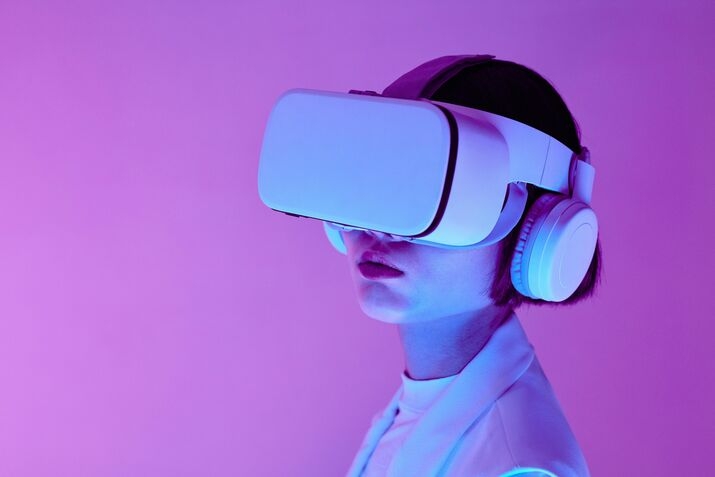
Simply put, immersive experiences are interactive digital or physical environments that actively engage users through VR, AR, or mixed reality, blurring the line between the physical and digital world.
For instance, in entertainment, a user could explore a fully digital world as if standing in the physical realm. In retail scenarios, AR can let consumers “try on” clothes or see how a piece of furniture fits in their own homes before the final purchase. Essentially, these approaches elevate an ordinary interaction into cherished, interactive journeys.
How Immersive Experiences Are Changing Entertainment in the USA
The U. S. entertainment industry has been one of the oldest and earliest adopters of immersive technologies. First came the so-called explosion of VR gaming, in which users find themselves in fully interactive environments, where they can freely move about, manipulate objects, and engage with other players in real-time. Immersive cinemas and 360-degree video experiences are witnessing an enhancement in movie-watching ability, paving the way for storytelling to manifest in an entirely different perspective that engages the human spirit.
Immersive concerts and events bridge the digital and physical worlds, letting audiences attend live shows, interact with artists, and enjoy full concert experiences at home. As a result, demand in the U.S. entertainment industry is rapidly growing and reshaping content consumption.
Immersive Experiences In Education
The immersive experience is redefining the nature of education in the United States. One would have thought that in the past, students would mainly rely on textbooks and lecturing, which might have limited interactivity. Now, through the VR and AR tools, students can visit these places, conduct science experiments virtually, and engineer complicated projects while sitting comfortably in their classrooms.
Immersive simulations let medical students practice surgeries or emergencies in a safe, controlled environment. This approach boosts understanding, retention, and critical thinking, making immersive experiences increasingly popular in U.S. schools, colleges, and training centers.
Immersive Experiences in Business
In America, every business implements immersive experiences to foster customer engagement, establish marketing strategies, and smooth operations. A classic case involves real estate agents who conduct virtual tours of properties so a potential buyer can just “visit” multiple homes without having to physically visit the site. Retailers would have loved AR apps that allow consumers to see a product in their environment, thereby enhancing buyer confidence and minimizing returns.
Immersive experiences and training sites provide a complete employee orientation; simulate work situations in workplaces and teach intricate tasks efficiently. This reduces training costs incurred from traditional methods; accelerates the learning process; and increases institutional productivity. Making a very simple statement, immersive experiences drastically change the way American businesses get operational, engage with customers, and compete with each other.

Benefits of Immersive Experiences
Here, we are talking about immersive experiences that offer real benefits and extend far beyond mere novelty. For example, some of these include:
- Enhanced Engagement – Immersive experiences are more successful in capturing attention than traditional media. Actually, users do feel transported into the environment, which encourages actual interaction while simultaneously strengthening emotional bonding.
- Improved Learning Outcomes – By engaging multiple sensory modalities and providing real experiences, immersive tools undoubtedly increase the understanding and retention of information, be it schooling, on-the-job professional training, or customer product onboarding.
- Increased Customer Satisfaction – With such interactive experiences, a consumer is able to look into the products and services in detail, which leads to a more informed decision and results in a higher satisfaction rate.
- Competitive Edge – Organizations deploying immersive technologies stand out in an already crowded market, providing consumers with novel and memorable experiences.
- Scalability and Accessibility – Digital immersive experiences capture a large crowd residing inside the U. S., lifting geographical restrictions, and providing access to an elite experience remotely.
Leading Immersive Platforms in the USA
Several of the United States-based platforms are also at the forefront of immersive technology:
- Oculus (Meta) – It includes a range of VR headsets and content that provide interactive gaming and social experiences.
- Magic Leap – Focuses on AR and mixed reality applications in enterprise and healthcare solutions.
- Niantic – It gives a mixed reality experience comprising AR games such as Pokémon GO, which involve real-world locations combining with interactive digital content.
- Unity and Unreal Engine – These create immersive experiences for gaming, simulation, and training purposes.
These platforms basically provide the tools and frameworks used by creators, educators, and businesses to design and deploy immersive experiences.
Ethical and accessibility considerations
As immersive experiences continue to spread, ethical and accessibility concerns must therefore be carefully addressed. Moreover, prolonged VR use can cause motion sickness or eye strain, which is why developers are prompted to create clear guidelines for safe and inclusive experiences.
Furthermore, accessibility features such as closed captions, haptic feedback, or voice recognition-interfacing with whether to enhance inclusiveness in immersive experiences. Hence, ethical and access philosophies pursued by U. S. companies will effectively increase audiences, foster trust, and maintain adoption forever.
The Future of Immersive Experiences in the USA
The future of immersive experiences in the USA is bright and rapidly evolving. With AI, 5G connectivity, and haptic technology advancing, these experiences will only get more interactive, realistic, and integrated into day-to-day life.
Also, there shall be continuing returns from immersive solutions for health care, travel, education, finance, and retail. To name some examples: virtual traveling, remote medical consultations, and simulations powered by AI. Technology will bring forth means in the U. S. for immersive experiences to engage audiences while also creating new definitions of productivity, creativity, and collaboration.
How Businesses and Educators Can Start
For organizations eager to adopt immersive experiences, starting small can yield significant results:
- Pilot Programs–Test VR or AR tools with limited audiences before scaling.
- Partner with Experts-Collaborate with developers or agencies specializing in immersive content.
- Focus on User Experience-Ensure the experience is intuitive, accessible, and engaging.
- Measure Impact-Track engagement, learning outcomes, or customer satisfaction to optimize future deployments.
In this way, companies and educators in the United States may promote the adoption of immersive experiences in business and educational activities while also gearing toward the maximization of ROI.
In an Essence
Immersive experiences are no longer futuristic—they’re transforming entertainment, education, and business in the USA. VR gaming, AR shopping, virtual classrooms, and employee training engage users with interactive and memorable experiences.
Beyond boosting engagement and innovation, immersive experiences give businesses and educators a competitive edge, revolutionizing how Americans consume digital content and becoming a vital part of modern industry strategies.
Gone are the days when immersion in entertainment, education, or business was just about passion. Today, embracing immersive experiences gives a competitive edge in the U.S. digital landscape.