
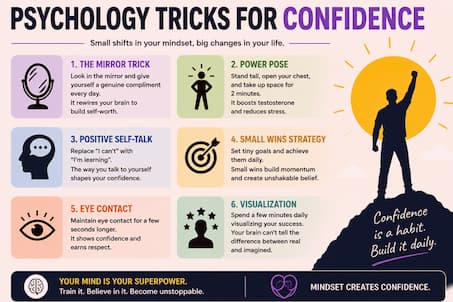
Self-confidence really matters for personal success, career momentum, connections, and general psychological health. You can see it too; many folks across the United States look for practical approaches to improve their self-worth, so they can feel more secure in social moments as well as at work. The good news is that confidence is not something you just receive at birth. It is a skill you can grow through proven psychological methods that actually make sense.So in this guide, we will walk through the best Psychology Tricks for Confidence you can use to upgrade your mindset, your body language, your communication style, and the daily habits you repeat. These science-backed approaches are simple to use, and they can create real and lasting changes over time, even if you start small.
Whether you’re preparing for a job interview, a public speaking event, or a business meeting, these confidence-boosting techniques can assist you in reaching your goals. They can also make you feel better about yourself in everyday life, even when nothing “big” is going on.
Why Confidence Matters in Everyday Life
Confidence touches nearly every part of life. Studies in psychology indicate that more confident people are more likely to:
- Achieve career success
- Form healthier relationships
- Manage stress effectively
- Choose positive risks
- Build leadership skills
- Strengthen communication abilities
- Support steadier mental health
Low confidence can bring on anxiety, worry about failure, self-doubt, and chances that quietly pass by. Still, if you learn effective Psychology Tricks for Confidence, you can train your mind to see things a bit differently and respond more positively to pressure.
Psychology Tricks for Confidence: Use the Power Pose Method
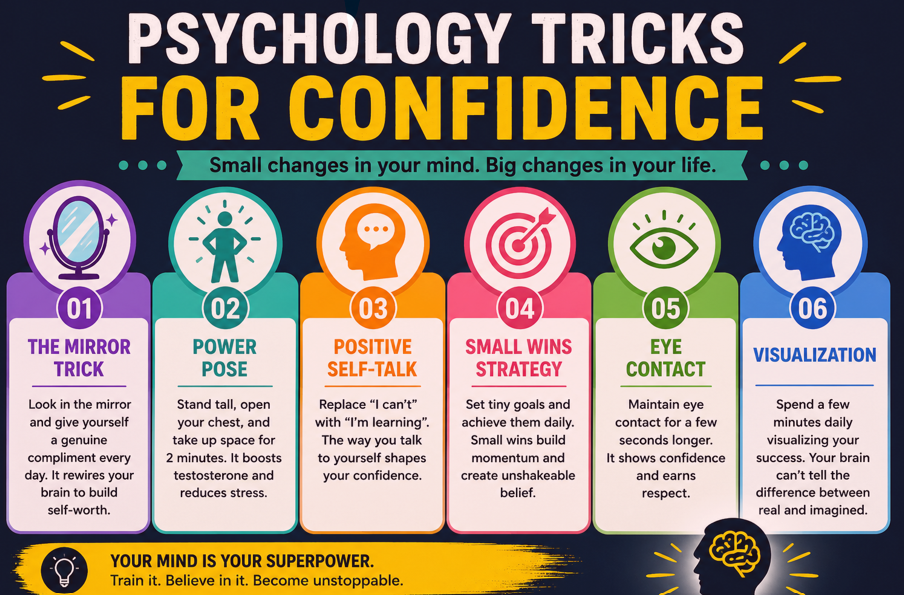
One of the most effective psychological tricks for confidence is changing your body position. In behavioral psychology, body language seems to guide how we feel inside, even if we do not notice it right away.
If you stand tall, with your shoulders pulled back and your chest open, it can send a quiet message to your mind that you are ready and capable. Then you might feel steadier, even when something is tense. People often call it a “power pose”, even if it sounds a bit dramatic.
How to practice :
- Stand upright for 2 minutes
- Keep your chin a little raised
- Do not cross your arms
- Keep your breathing steady
This small routine can lower nervous energy before key moments like interviews, public presentations, or team meetings.
Psychology Tricks for Confidence: Swap Negative Self-Talk
The way you speak to yourself matters greatly when it comes to confidence. In fact, many people unintentionally replay discouraging thoughts in their minds. As a result, these negative beliefs can slowly reduce self-esteem and increase self-doubt. For example, common thoughts often include:
- “I am not good enough.”
- “I always fail.”
- “People will judge me.”
Instead of repeating the same negative thoughts, cognitive psychology suggests replacing them with more positive and realistic affirmations, even when it feels awkward at first.
Better Alternatives:
- “I am improving every day.”
- can handle the challenges.”
- “I deserve success.”
If you practice positive self talk daily it can boost self-esteem over time, not instantly but steadily
Visualize Success Before Important Situations
Visualization is widely used by athletes, entrepreneurs, and public speakers across the USA. In fact, this powerful mental technique helps the mind prepare for success and improves focus before serious situations. As a result, many people feel calmer, more motivated, and mentally ready to perform at their best.
Before you step into a stressful moment, close your eyes and imagine yourself succeeding with calm confidence. It is a small routine, but it can lessen anxiety and sharpen attention, too.
Imagine:
- Speaking clearly
- Smiling naturally
- Receiving positive feedback
- Staying calm under pressure
This approach reduces fear and builds mental readiness.
Dress Confidently to Influence Your Mindset
What you wear can, kind of directly shift your confidence levels. In fact, psychologists call it “enclothed cognition” and, yeah, it’s not just a catchy phrase. There’s research suggesting that clothing helps shape how you think , how you feel, and even how you behave. So when you dress well, it can naturally boost your self-confidence, and it also makes a sharper first impression.
If you dress neatly and more professionally, your mind tends to link your look with competence and real authority. Because of that, you might automatically feel steadier inside.
Clothing tips that actually raise confidence
- Wear clothes that are clean and fit you well
- Pick colors that help you feel powerful
- Keep up with grooming, without rushing it
- Use comfortable shoes, not the “just for today” kind
You do not have to chase expensive fashion just to look confident. Cleanliness and self-care are more important than anything fancy.
Keep Eye Contact While You Talk
Eye contact is one of the most noticeable nonverbal confidence cues. In fact, it plays a major role in how others perceive your personality and confidence level. Additionally, maintaining good eye contact can help build trust, improve communication, and create stronger personal connections.
When someone avoids it, they can look nervous or uncertain. But steady eye contact signals trust and a calm sense of self.
Try this small practice
- Hold eye contact for about 3 to 5 seconds
- Don’t stare in a harsh way
- Let a natural smile show while you speak
- Pay attention and focus on listening carefully
This method can really help you communicate better in both your private life and at work, even if you feel a bit rusty at first.
Stop Comparing Yourself to Others
Social comparison is one of the fastest confidence killers, and today it feels even more intense because of social media.
Psychology specialists usually suggest that you shift your attention toward personal development instead of comparing your entire life to someone else’s highlight reel. After all, constant comparison can damage self-esteem and increase self-doubt. Instead, focusing on your own progress can help you build healthier confidence and a more positive mindset.
Keep in mind that
- Social media often shows unrealistic peaks and polished moments
- Almost everyone has setbacks happening behind the scenes
- Your path is your own; nobody gets the same route
When you track what you’re doing, day to day, your confidence tends to grow in a healthier way than chasing external approval.
Build Confidence Using Small Wins
One psychological approach for building confidence is to make small daily wins a normal habit. In fact, even minor accomplishments can create a sense of progress and motivation. Over time, these small successes gradually strengthen self-belief and help develop long-lasting confidence.
Your brain releases dopamine when you complete something, even if the goal is minor. That creates a kind of good momentum, and your self-belief gets reinforced.
Examples of Small Wins:
- Making your bed early
- Completing a workout
- Finishing a work task, even if it is quick
- Reading for 20 minutes
- Speaking up in meetings, really, it matters.
Over time, these small wins begin to add up, and as a result, they can make your self-belief feel much stronger. Furthermore, consistent progress helps build a more positive mindset and encourages greater confidence in everyday situations.
Psychology Tricks for Confidence: Practice the “Act As If” Method
Behavioral psychologists often recommend doing things, like acting confident even when you don’t fully feel it yet. Over time, this kind of behavior can shift your mindset.
This approach works because behavior steers emotions.
Act As If You Are :
- Calm, even when pressure shows up
- Capable of success
- At ease socially
- Ready for challenges
Eventually, your brain starts adjusting to these actions, and confidence starts feeling more natural, not forced.
Psychology Tricks for Confidence: Improve Your Physical Health
Mental confidence and physical well-being are closely connected. In fact, your physical health can significantly influence your mood, energy levels, and overall self-esteem. Therefore, maintaining healthy habits can play an important role in building stronger confidence over time. Exercise can lift mood, lower stress hormones, and bring up your energy. Also, proper sleep and smart nutrition help emotional steadiness.
Confidence-Boosting Habits:
Healthy routines can really boost your mental viewpoint.
Get Used to Accepting Compliments
Many people who struggle with low confidence tend to dismiss compliments immediately. As a result, they often overlook their strengths and achievements. However, learning to accept positive feedback can gradually improve self-esteem and reinforce a healthier self-image.
Instead of throwing off the praise, psychology specialists suggest you take compliments with grace.
Instead of Saying:
- “It was nothing.”
- “I just got lucky.”
Try Saying:
- “Thank you, I appreciate it.”
- “I put time into that.”
When you accept positive feedback, your self-esteem usually strengthens.
Psychology Tricks for Confidence: Tackle Small Fears, Step by Step
Confidence is built through doing things, not by avoiding them.
Exposure therapy is a well-known psychological method. In practice, it helps you meet your fears in smaller and easier steps, so your mind can adapt.
Examples:
- Start a conversation with a stranger
- Speak up during team meetings
- Attend a networking event
- Practice talking in front of people
Each win like that, lowers the fear response and builds more staying power.
Build Solid Communication Skills
Communication skills are pretty essential if you want to feel sure of yourself at work, and in social situations, you know how it goes. When you start improving the way you speak, you might end up feeling more respected and able to handle things. Also, strong communication can lead to better career chances and more professional openings in the future.
Communication Tips:
- Talk a bit slowly and clearly
- Try not to use filler words like “um” and “like”
- Pay attention actively, not just hearing
- Ask questions that feel genuine. Rehearse public speaking often, even in small moments
When your communication feels confident, you can end up with better job opportunities and a stronger chance to show leadership.
Spend Time with Positive People
Where you spend your time really affects your confidence.
People who are supportive, like friends, mentors, and coworkers, can help you grow personally. Meanwhile, negative people may push self-doubt more and more, even if you do not notice at first.
Build a Positive Circle:
- Stay around, encouraging individuals
- Avoid toxic criticism, and the repetitive kind
- Get involved in professional groups or communities
- Choose motivational content carefully, and follow it consistently
Healthy relationships can reinforce emotional confidence in a steady way.
Focus on Progress, not Perfection
Perfectionism usually makes people feel anxious and lowers their self-esteem. Because of that, a lot of folks have trouble spotting what they have already improved on.
Psychologists often suggest taking a growth mindset approach instead, and honestly, it helps more than it sounds.
A growth mindset is basically the belief that you can get better through effort, practice and learning. Not instant talent or some fixed score.
Keep in mind:
- Mistakes are part of the learning curve
- Nobody achieves things perfectly every time
- Learning grows long-term confidence
When you celebrate progress, it eases the extra pressure you might put on yourself.
Psychology Tricks for Confidence: Practice Gratitude Every Day
Gratitude moves your attention away from fear and all the negativity that pops up.
Studies indicate grateful people tend to have more happiness and better emotional stamina. Because of this, they frequently feel more secure in themselves and more hopeful too.
Easy ways to do gratitude:
- Write down 3 good things each day
- Value personal wins and achievements
- Say thanks to supportive people
- Revisit your own strong points
Gratitude builds a healthier mental viewpoint, and it can boost confidence in a natural way.
Common Mistakes That Really, Really Hurt Confidence
When you are learning psychology tricks for confidence, try not to fall into these habits, as they mess things up a lot:
1. Looking For Approval All the Time
Depending on other people for validation tends to weaken self-confidence; it feels important, but it drags you down.
2. Overthinking Every Single Moment
When you over-analyze everything, anxiety goes up, and self-doubt tags along too. You end up stuck in your head, not moving.
3. Being Terrified of Failing
Failing is part of the training, part of personal growth and learning. If you treat it like an enemy, you’ll hesitate more.
4. Staying in Negative Social Circles
Toxic surroundings can bruise mental health and make your inner voice harsher. Even small stuff, repeated, can wear you down.
5. Not Paying Attention to Self-Care
Low sleep, chronic stress, and unhealthy patterns affect confidence. Your mind and body speak to each other; ignoring both is costly.
How Long Does It Take To Build Confidence?
What matters most is consistency and routine. In fact, your brain begins to build stronger confidence patterns when you practice helpful habits regularly rather than occasionally. Therefore, maintaining positive routines over time is essential for developing lasting self-confidence and emotional resilience.
Most folks see some progress in only a few weeks if they apply the psychology techniques regularly, and yes, that means showing up again and again.
What matters most is the rhythm. Your brain starts to build firmer confidence schemas when you practice helpful routines consistently, not occasionally.
Last Thoughts About Psychology Tricks for Confidence
Learning effective Psychology Tricks for Confidence can shift your personal and professional life. Confidence is not about being flawless or never scared; it is more like trusting yourself enough to act even with uncertainty, and that is where it gets real fast.
If you refine body language, adjust negative thinking loops, rehearse conversation abilities, and keep your attention on small victories, you can slowly grow a sturdier self-belief over time.
Try starting with one or two strategies from this guide and apply them consistently in your daily routine. Over time, even small improvements can lead to major long-term changes. Most importantly, staying patient and committed to the process will help you build lasting confidence and personal growth.
Confidence is assembled step by step, and every constructive action pulls you nearer to becoming a stronger version of yourself.