
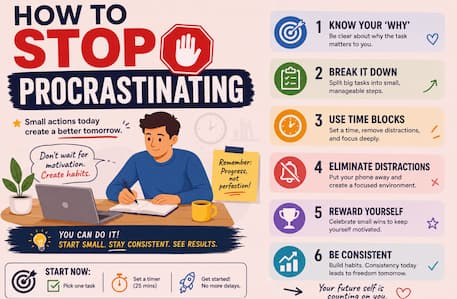
Procrastination is one of the biggest barriers when it comes to productivity, achievement, and peace of mind. Whether you are a student, founder, remote worker, or busy parent, putting off important work can quickly lead to stress, lost chances, and a lot of irritation. If you’ve been looking for solid, practical ways to sharpen attention and get more done, this guide on how to stop procrastinating will help you take hold of your schedule and your inner energy.
In the United States, millions of people deal with procrastination every day. For instance, lots of employees push back critical projects, while students frequently delay studying until the very last stretch. Because of that, procrastination drags down output, harms mental well-being, and can even damage long-term financial results. Good news, though, procrastination is not a forever personality feature. It is more like a learned habit that can be reshaped with the right tactics.
In this article, you will discover why people procrastinate, the less obvious triggers underneath it all, and clear techniques you can begin using today.
What is procrastination?
Procrastination is basically delaying or avoiding tasks when you already know they matter. In a lot of situations, it shows up when something feels hard, overwhelming, dull, or stressful. And yeah, people often act like it is just “laziness”, but that is not always how it works. Actually, procrastination is frequently connected to feelings like fear, anxiety, perfectionism, or even a low drive.
You can notice it in everyday habits, for instance, delaying work assignments until the last minute, putting off studying for exams, avoiding difficult conversations, waiting too long to begin a business, or a personal project. Also, wasting hours scrolling social media instead of finishing priorities happens more than people like to admit. So, learning how to stop procrastinating really starts with getting clear on the why behind it.
Why do people procrastinate?
Before you can break the pattern, you should find what is underneath it. Here are some of the most common causes of procrastination.
- Fear of failure
Many people delay their tasks because they are scared of messing up, or they worry they will not meet others’ expectations. As a result, this worry creates anxiety, and then avoidance feels safer than actually doing anything, even if it makes things worse later on.
- Perfection obsession
People who chase perfection often procrastinate because they want everything to look flawless. Instead of starting in a rough way, they put the whole thing off, completely, because they cannot accept “not perfect yet”.
- Feeling swamped
Big projects can feel intimidating, so when tasks seem too large, the mind tries to dodge them in order to lower stress.
- Low drive
When a task feels boring or like it has no real value, it becomes easier to delay it.
- Weak time planning
Without a clear plan, people frequently misjudge how long a job takes. After that, they keep postponing the important responsibilities, again and again.
- Digital interruptions
Social media, streaming shows, gaming, and even phone notifications keep pulling attention away. So many people find it hard to stay focused for even a short while.
How to stop procrastinating: 15 practical strategies
Now let’s explore real-world methods that can help you fight procrastination and become more productive, even when you feel reluctant.
Split big responsibilities into little moves
One of the best ways to stop delaying is to make the whole thing feel less heavy.
Instead of saying :
- “I have to write a 20-page report.”
- Try to cut it up into smaller actions, like
- Research the topic
- Draft an outline
- Write the introduction
- Finish one part at a time
By doing this, tiny steps reduce the pressure, and it becomes easier to start.
How to Stop Procrastinating: Try the Five Minute Rule
Tell yourself you just need to work on the task for five minutes.
Usually, the hardest moment is the first one. But once you begin, the momentum often carries you forward longer than expected.
This straightforward method is really useful for anyone trying to learn how to stop procrastinating.

Eliminate distractions from the start
Your surroundings directly affect how well you focus, and this can make or break your progress.
- To boost attention
- Turn off notifications you do not need
- Put your phone in another room
- Use web blockers during your work sessions
- Keep your workspace clean and organized
When your desk is tidy, your mind does less wandering, and you can concentrate much better.
How to Stop Procrastinating: Set Clear Deadlines
If tasks have no deadlines, they usually get postponed forever
Even when a project does not come with an official due date, make a personal schedule anyway
For example:
- Finish research by Tuesday
- Wrap up the draft by Thursday
- Polish the final version by Friday
In practice, these firm time points increase responsibility and also boost output
How to Stop Procrastinating: Try the Pomodoro Technique
The Pomodoro Technique is a well-known productivity approach.
It works like this:
- Work for 25 minutes
- Take a 5-minute pause
- Repeat four rounds
- Then take a longer break
Because each session is brief, your mental fatigue feels lighter, and difficult work seems less threatening
How to Stop Procrastinating: Aim for Progress, Not Perfection
Perfectionism can easily turn into stalled progress
Keep this in your head:
Completed work beats flawless work every time
In other words, taking imperfect action is way more useful than waiting around for the perfect moment, especially when you keep delaying, even a little.
Create a Daily To-Do List
A structured plan helps you remain orderly and in the right headspace, not just busy.
When you make the list:
- Start with the important tasks first, then fill in the smaller ones
- Keep it realistic, or it will collapse by noon
- Don’t overpack your schedule; leave some breathable time
Also, crossing tasks off once you finish them gives a small but steady hit of satisfaction
How to Stop Procrastinating: Use Time Blocking
Time blocking is basically assigning specific windows for specific work, so your day has boundaries
Example:
- Time Activity
- 8:00 AM to 9:00 AM Emails
- 9:00 AM to 11:00 AM Deep Work
- 11:00 AM to 12:00 PM Meetings
As a result, this method reduces decision fatigue and pushes your output higher
Identify Your Peak Productivity Hours
Most people have certain moments during the day when their focus feels sharper
For example, some folks do better in the morning, while others work better at night
So schedule your high-value tasks during those high-energy hours, and you will get better results
Reward Yourself
Rewards build that positive drive, yeah, which matters more than people notice.
- After you finish a task, try giving yourself something pleasant, like
- a brief coffee break
- watching an episode of your favorite show
- taking a walk around
- listening to music
So, those small treats can help anchor constructive habits, not just in your head but in your daily routine.
Practice Self-Discipline Every Day
Self-discipline works like a muscle. The more you train it, the more resilient it gets.
Begin with small promises, not huge plans:
- Wake up at the same time each day,
- Finish one key task before checking social media
- Exercise regularly
After a while, sticking with it creates momentum that keeps pulling you forward.
Quit Waiting for Motivation
A lot of people believe they must wait for motivation before they move.
But usually, doing comes first, then motivation follows.
When you make real progress, your brain stays more invested and energized.
Add Accountability
When someone helps you stay responsible, follow-through improves.
You can:
- Team up with an accountability partner
- Join productivity groups
- Tell friends or coworkers your goals
- Hire a coach or mentor, if you can
When accountability shows up from outside, it adds external drive, and that often helps people keep showing up in a steady way.
Level Up Your mental and physical health
Low sleep, high stress, anxiety, and a lack of movement can feed procrastination.
At the same time, good routines and small habits boost your attention and mental sharpness.
Try this:
- Aim for 7–8 hours of sleep each night
- Move your body consistently
- Choose nutritious meals
- Do mindfulness or meditation
In the end, a well-cared-for body supports a productive mind.
Forgive yourself, then keep going
People delay tasks sometimes. It happens to everyone.
Instead of spending time on guilt or getting stuck in self-criticism, point your energy toward growing.
You can:
- Take something useful from setbacks
- Get back your focus fast
- Begin again right away
- Really, though, growth matters more than perfection.
- The Psychology Behind Procrastination
If you understand what’s going on psychologically, you can address procrastination in a more effective way
Research suggests procrastination is frequently linked to emotional regulation, not just poor discipline or laziness. In a lot of situations, people delay work to get a short reprieve from nagging emotions, stress, boredom, or fear. Sadly, when you keep dodging the assignment, you usually end up with more anxiety later, and it can feel heavier over time.
So the real point is learning to tolerate brief discomfort for the longer-term payoff. Successful people are not always more driven. Frequently, they are just more able to keep moving, even when it feels inconvenient or tense.
How to Stop Procrastinating at Work
Procrastination at work can hurt output and also limit career progress. If you’re a professional, try these approaches:
- Prioritize High-Impact Tasks
Work on the items that generate the biggest results.
- Avoid Multitasking
Jumping between jobs lowers efficiency and adds mental tiredness.
- Start With the Hardest Task
Finishing the difficult part early builds momentum for the rest of the day.
- Use Productivity Apps
Apps like Trello, Notion, Todoist, and Asana can help you stay organized and focused, even when your brain is doing… a lot.
How to Stop Procrastinating as a Student
A lot of students end up stalling because deadlines, exams, and distractions keep showing up. And then you end up waiting, repeat, rinse, repeat. It is a common loop.
Helpful strategies
- Do studying in short sessions
- Check and review notes each day
- Use flashcards for active recall, and keep it moving
- Make a steady study schedule that you actually follow
- Study somewhere without distractions, like a library corner or a quiet room
- When you build those study habits, students usually feel less stress and do better academically.
Benefits of Overcoming Procrastination
Learning how to Stop Procrastinating can lift almost every part of life.
You may notice:
- Increased productivity
- Lower stress
- Better time management
- More confidence
- Improved financial opportunities
- Stronger relationships
- More free time
- Higher career success
Basically, small changes today can create huge long-term improvements if you keep going.
Final Thoughts
If you want to learn how to stop procrastinating, the most important step is to start doing something right away.
You do not really need perfect motivation, perfect timing, or perfect conditions.
- Instead, begin with something small.
- Give attention to progress.
- Grow steady habits.
After a while, your brain will adjust, and getting things done will feel simpler.
Keep in mind that procrastination is not a life sentence. With the right mindset and solid strategies, you can take charge of your time, achieve your goals, and craft a more productive future.